
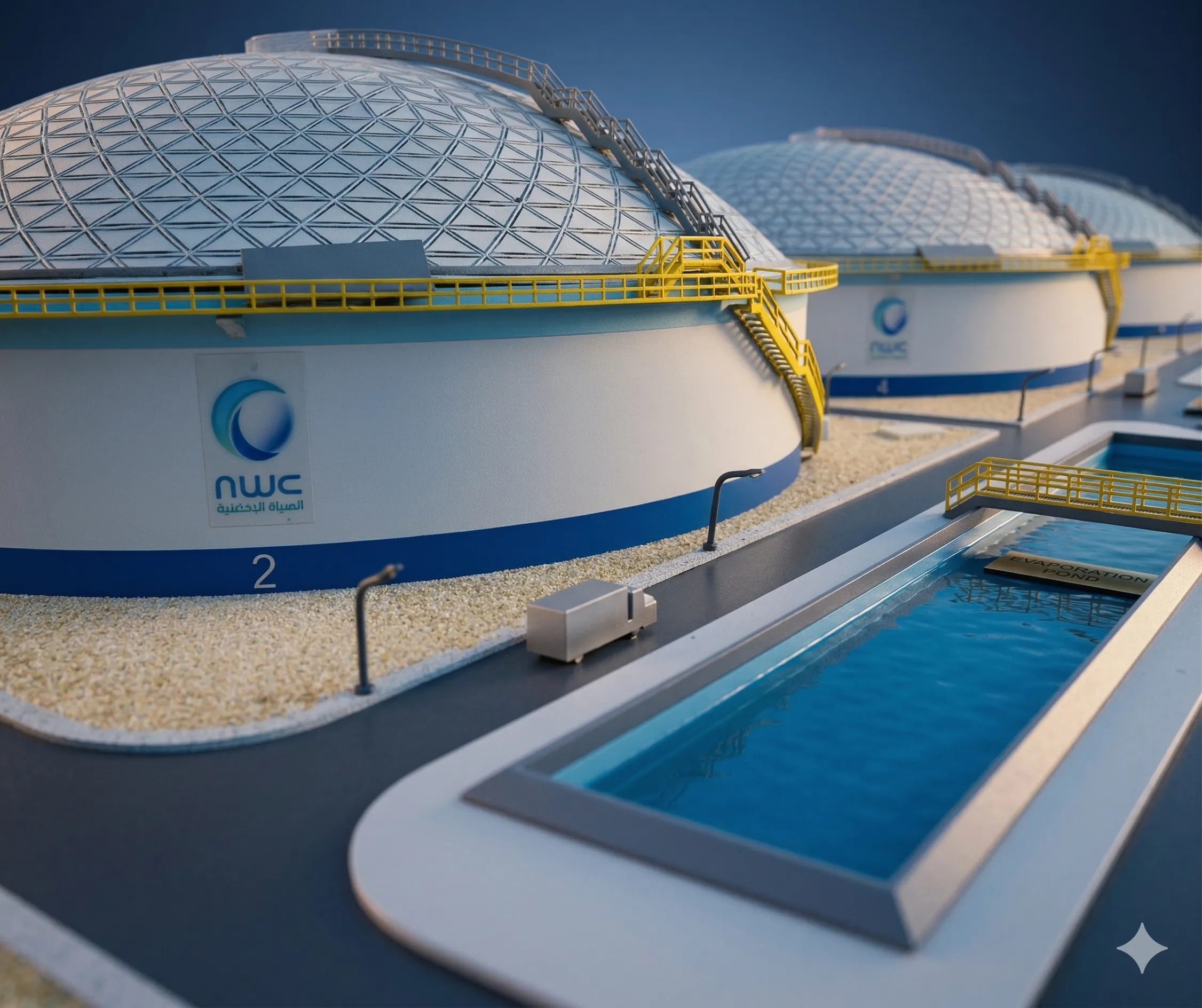
A project can be technically correct, beautifully designed, and still be misunderstood. And misunderstanding has a way of becoming reality.
There is a moment in every major project when something quietly changes.
The drawings are approved.
The renderings look impressive.
The numbers make sense.
Everyone in the room appears aligned.
And yet, the project that exists in the minds of the people around the table is no longer exactly the same project.
Not because anyone changed the design.
Because everyone interpreted it differently.
That difference may be invisible at first.
Then it becomes a question.
The question becomes a revision.
The revision becomes a delay.
And eventually, the interpretation becomes part of the project itself.
This is how the gap between a project and its perception becomes one of its biggest risks.
The Rendering Shows a Project. The Room Sees Several.
Give the same rendering to an architect, an investor, an engineer, and a government decision-maker.
They won't necessarily see the same thing.
The architect may notice proportions and spatial relationships.
The investor may immediately look for value.
The engineer may focus on technical feasibility.
The decision-maker may see its impact on the surrounding city.
One image.
Four interpretations.
None of them necessarily wrong.
But together, they create a problem that most project plans don't measure:
interpretation risk.
The larger and more complex the project becomes, the greater that risk can become.
Complexity Doesn't Stay on the Drawing
It travels.
From the masterplan into the presentation.
From the presentation into the meeting.
From the meeting into individual decisions.
And from those decisions into construction.
By the time misunderstanding becomes visible on site, correcting it may require far more than changing a slide.
This is why some of the most expensive project problems don't begin with a construction mistake.
They begin with a misunderstanding that nobody noticed early enough.
So What Does "Seeing the Project" Actually Mean?
It means being able to understand relationships—not just objects.
Where one building sits in relation to another.
How a development connects to its surroundings.
How scale changes across a district.
Where infrastructure moves.
What the project feels like as a whole.
Digital visualization can communicate extraordinary detail.
But major decisions often require something broader than detail.
They require context.
And context is where physical models become surprisingly powerful.
A Model Doesn't Show You More.
It Makes You Question Better.
That is the difference.
A decision-maker can walk around a physical model and discover relationships that are difficult to perceive in a sequence of slides.
A finger can trace a road.
A stakeholder can compare two zones.
A team can stand around the same object and discuss the same spatial relationship.
The model becomes a shared reference point.
Not the answer.
The place where better questions begin.
And better questions are often the beginning of better decisions.
This Is Why Scale Matters
A project can be too large to understand from the ground.
Too complex to understand from a single drawing.
Too detailed to understand from a presentation.
A scale model changes the equation.
It compresses an enormous system into something the human mind can navigate.
Not by simplifying the project until it loses meaning.
But by giving complexity a physical structure.
It turns scale into something people can experience.
Look at Hexagon
The lesson becomes especially clear with projects operating at extraordinary scale.
Hexagon, Saudi Arabia's major government data center development, represents an infrastructure vision that is difficult to communicate through numbers alone.
Its scale, technical complexity, and strategic importance make it the kind of project that requires more than a conventional presentation.
During its launch, a physical model formed part of the exhibition experience.
That choice matters.
Because when a project is difficult to imagine, the model doesn't simply answer:
"What will it look like?"
It helps answer a much more important question:
"What exactly are we building?"
The New Role of the Architectural Model
For a long time, models were treated as representations.
Today, the most valuable ones can play a much larger role.
They can become:
A shared language.
A decision interface.
A stakeholder alignment tool.
A strategic communication asset.
And ultimately, a way of reducing the distance between a complex idea and the people responsible for turning it into reality.
That is a fundamentally different way to think about architectural models.
They don't simply represent the future.
They help people agree on what that future actually is.
At City Scale, We Build More Than What You See
For more than 27 years, City Scale has worked across more than 3,000 projects and 30+ countries, creating precision architectural and engineering models for developments where scale, complexity, and communication matter.
But the real value of a model isn't measured by how closely it resembles the drawings.
It is measured by what happens around it.
The conversation becomes clearer.
The questions become sharper.
Different disciplines begin looking at the same thing.
And decisions become easier to make.
Because the ultimate purpose of making a project visible isn't visibility.
It's alignment.
The Real Project Is the One Everyone Understands the Same Way
A drawing can represent a project.
A rendering can sell a vision.
A presentation can explain an idea.
But a truly successful project requires something beyond all three:
a shared understanding of what is actually being built.
Because once different people begin building different versions of the same idea in their minds...
the physical project is already at risk.
The most dangerous version of a project isn't the one that looks wrong.It's the one everyone thinks looks right—for different reasons.
City Scale Insight
Before you build the project, make sure everyone is building the same idea.